Childhood. Zvenyachi
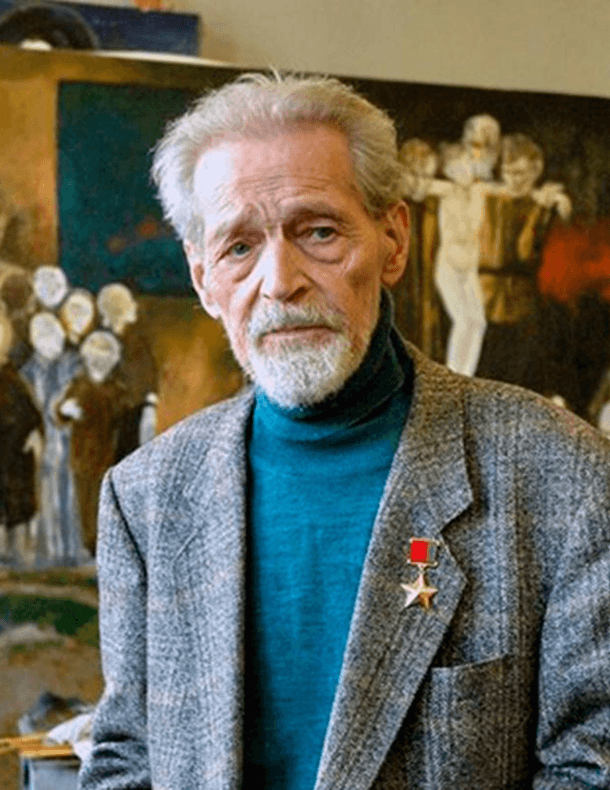
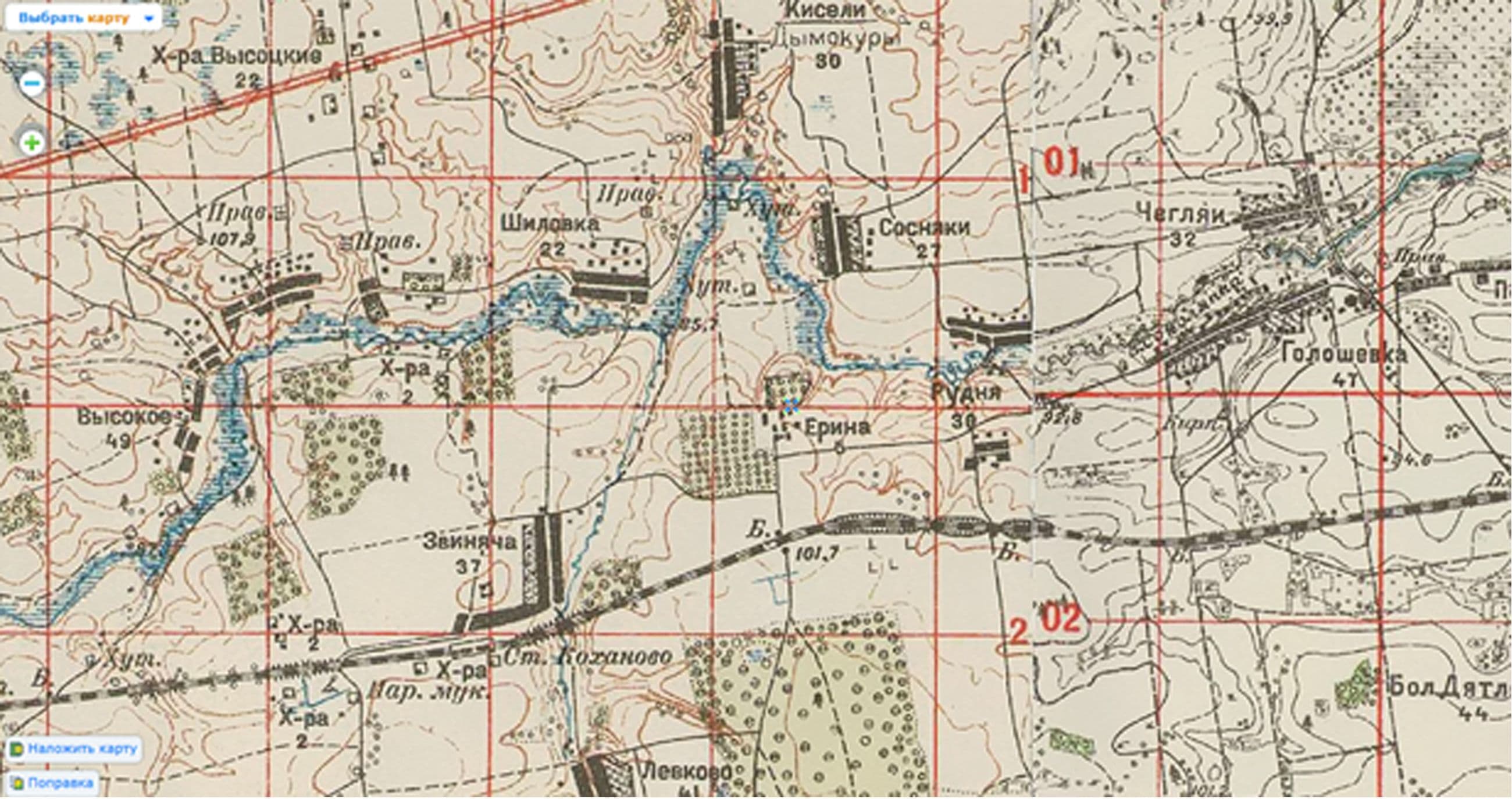
Mikhail Andreevich Savitsky was born in a family of peasants Anna Konstantinovna and Andrei Petrovich Savitsky on February 18, 1922, in the village of Zvenyachi, Kokhanovsky village council, Tolochin district, Vitebsk region.
In the early 19th century, this settlement was called Bol'shiye Zvenyachi (also known as Levkovo) in the Kokhanovskaya volost (region) of the Orthodox parish of the Kopys district. After 1861, the village, which had a population of approximately 170, became part of the Orsha district following the abolition of the Kopys district. In 1924, two years after the birth of M.A. Savitsky, the village was incorporated into the Tolochin district of the Vitebsk region.
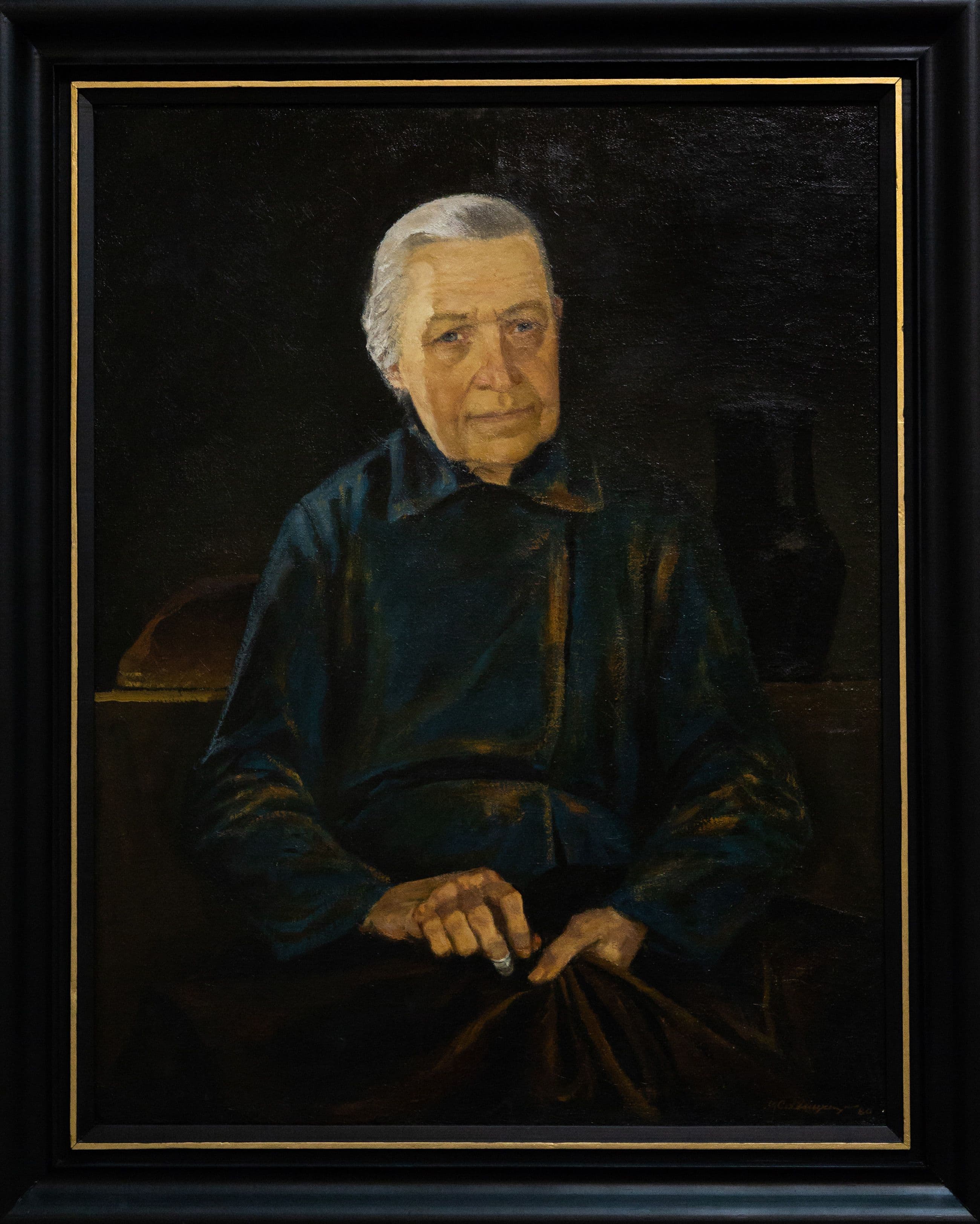
Mother
"My mother, Anna Konstantinovna, was a wonderful craftswoman. She spun and wove. She knew just the right number of turns to weave any pattern. She skillfully created patterns. We had a whole chest of her creations at home, spinning wheels, a loom—all the equipment. <…> I still wear the shirts she made for me after the war. <…> I remember my mother as very kind and cheerful. It seems nothing could bring her to despair. She had a light, gracious nature. She was also known as a healer. <…> She was appointed foreman on the collective farm, and then the collective farm beekeeper."
M.A. Savitsky
E. Pugacheva “Mikhail Savitsky”, Minsk: “Belarus”, 1982, pp. 7–8.
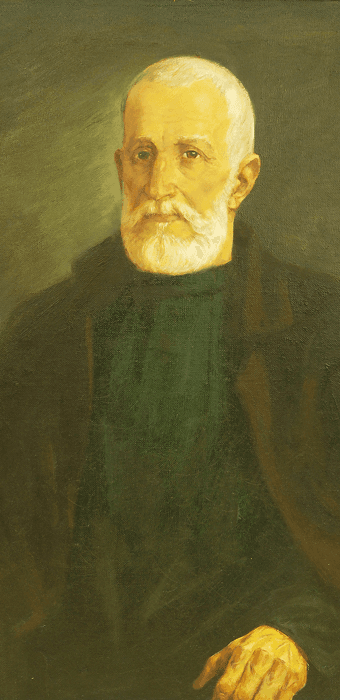
Father
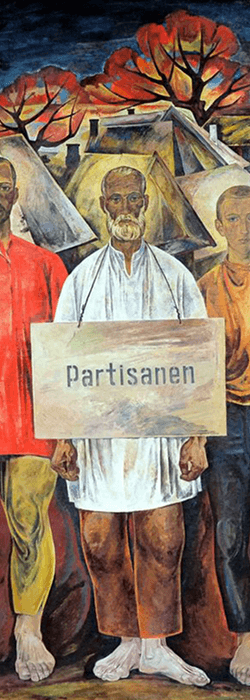
"My father never punished me, although he was strict. Whatever he said, I had to do without delay. Dark-haired in his youth, in old age he became as white as a hawk. A thin, aquiline nose, a full beard, a proud gaze, a certain strength was palpable in him. In the painting "Execution," there is a gray-haired old man. His prototype is my father."
M.A. Savitsky
E. Pugacheva, "Mikhail Savitsky," Minsk: "Belarus," 1982, p. 7.
Grandmother
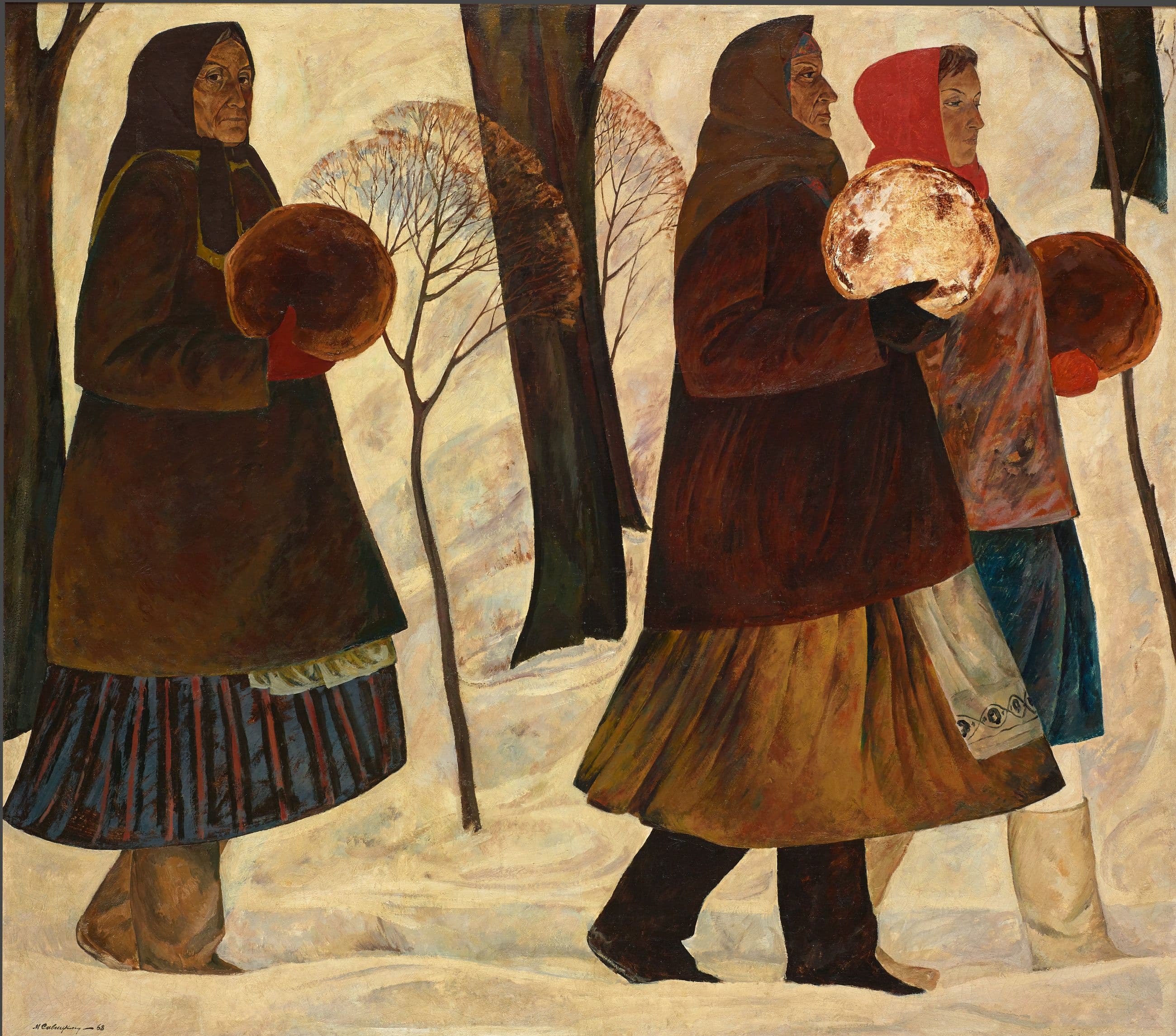
"I remember my paternal grandmother well. Everyone in the village was afraid of her. She was such a woman, you'd better pass her by in silence! She could knock you down with a word. Tall, thin, with black eyes, a piercing gaze—she looked like a gypsy. In the painting 'Bread,' the old woman walks with a loaf of bread—that's her."
M.A. Savitsky
E. Pugacheva, "Mikhail Savitsky," Minsk: "Belarus," 1982, p. 7
School
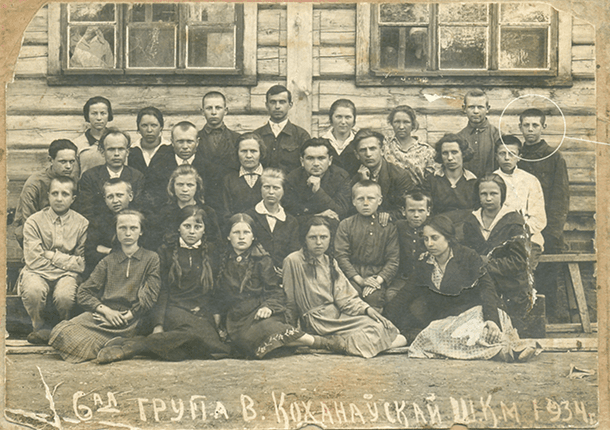
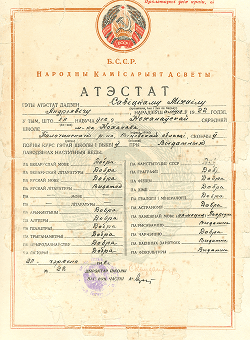
M.A. Savitsky's parents enrolled him in the Zvenyachskaya seven-year school, located four kilometers from Kokhanovo, in the fall of 1929. He attended Kokhanovo Secondary School from grades five through ten.
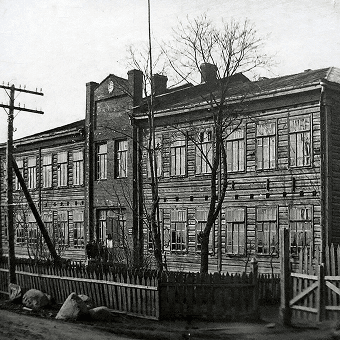
Kokhanovo Secondary School is one of the oldest schools in Belarus. It opened in 1868 as the Kokhanovo School in the village of Kokhanovo, housed in the volost government building. After the Great October Revolution, the school was designated as a first and second level school, then a seven-year school in 1928, and a secondary school in 1932. It was the first secondary school in the Tolochin District.
Between 1925 and 1927, a new two-story school building was constructed, and the old one housed a vocational school with two departments: metalworking and carpentry. During the war, the two-story building was burned down, and all school property was destroyed. Many teachers and students, as well as the school's principal, Solomon Moiseevich Kazhdan, perished in the fight against the Nazis.
In the army
"On September 12, 1940, I received a summons to the military registration and enlistment office. I left that same day. My friend Ivan Savinich was also leaving for the army a week later. We sat together for a farewell and never saw each other again. He died on May 9, 1945, in Berlin. <…> The war also took my older brothers."
M.A. Savitsky:
E. Pugacheva, "Mikhail Savitsky," Minsk: "Belarus," 1982, p. 8.
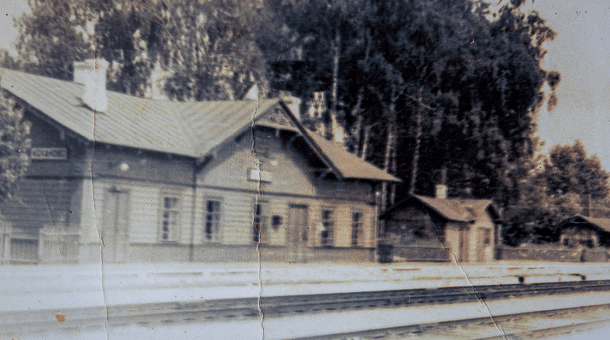
The old wooden building of the Kokhanovo station. Just above the roof, through the foliage of the trees, you can see the tower's openwork mesh.
Defense of Sevastopol
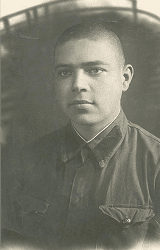
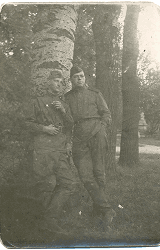
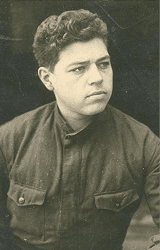
M.A. Savitsky began his service in the Red Army in Novorossiysk, in the Kursk 545th Anti-Aircraft Artillery Regiment. He completed the recruiting course and took the oath. He was later transferred to Rostov-on-Dom and assigned to the school for junior commanders specializing in anti-aircraft artillery control. From there, he was transferred to Grozny and appointed assistant sergeant major at the aviation school's training ground.
"The day the war was declared caused neither fear nor confusion... At that time, I was appointed unit commander, escorting recruits from Grozny to the Kokhovka area. We delivered this echelon, and immediately had to travel to Rostov-on-Don. From there, to Makhachkala, then to Sevastopol."
M.A. Savitsky
B. Krepak “Mikhail Savitsky. Red and Black”, Minsk: “Mastatskaya Litaratura”, 2014, p. 26.
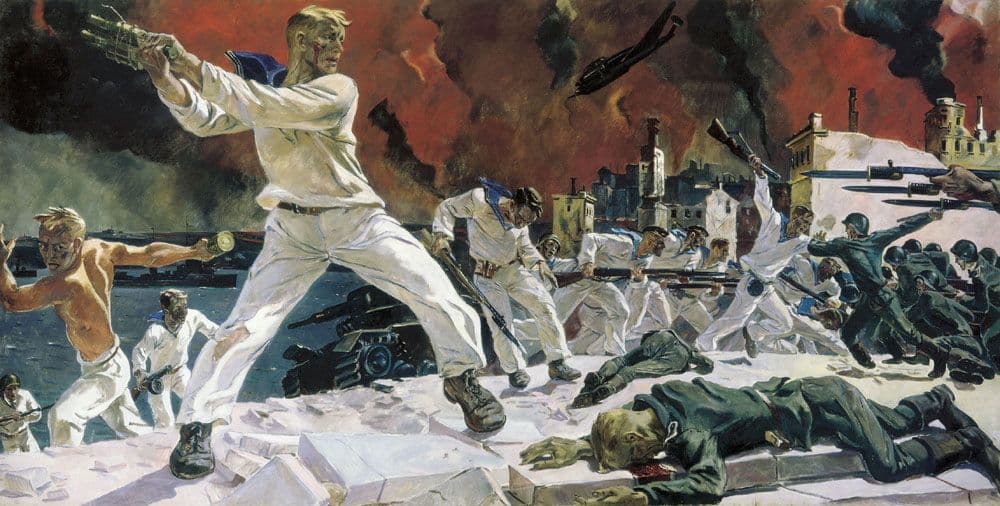
On July 3, 1942, the Soviet Information Bureau reported the loss of Sevastopol. On July 4, organized resistance ceased. The remaining soldiers attempted to break through to the partisans in the mountains. However, only a few managed to do so under complete encirclement. Thus, M.A. Savitsky was captured. The Nazis drove most of the captured Soviet soldiers toward Bakhchisarai. M.A. Savitsky was among them.
In captivity
"My biography is sordid. To be captured means to be a traitor to the Motherland, a traitor, as was considered in the Soviet years. Even at art school, three or four years after the Victory, many of my fellow students looked at me askance, suspiciously, and even with hostility”.
M.A. Savitsky
B. Krepak, "Mikhail Savitsky. Red and Black," Minsk: "Mastatskaya Litaratura," 2014, p. 44.
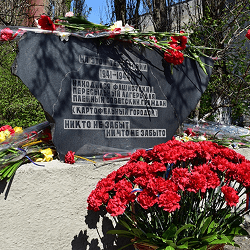
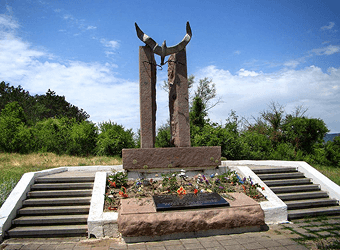
M.A. Savitsky spent three days in the Bakhchisaray transit camp, from where he was transferred to the Simferopol transit camp ("Potato Town"), and from there to Simferopol prison. In 1990, a memorial sign was erected at the site of the camp in Simferopol with the following text: "A fascist transit camp for captured Soviet citizens (Potato Town) was located on this territory from 1941 to 1944. No one is forgotten, nothing is forgotten."
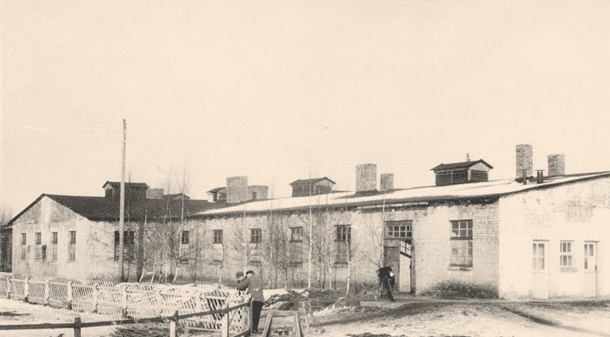
One in three Soviet prisoners of war who arrived in the German Reich between 1941 and 1945 passed through Stalag 326 (VI K) Senne (Stukenbrock-Senne, Germany). It served as a recruiting and transit camp in District VI. The former District VI almost entirely corresponds to the current borders of North Rhine-Westphalia. The so-called "Russian camp" was primarily intended to provide labor. In September 1942, M.A. Savitsky was imprisoned there.
At the camp
From Stalag 326, M.A. Savitsky was sent to a forced labor camp in Düsseldorf, to the train car factory. A resistance movement had developed at the factory, led by Georgy Ivanovich Kornilov, a former commissar of a partisan detachment in Crimea. A group of saboteurs, including M.A. Savitsky, mastered a welding technique that produced weak seams. As a result of the sabotage, hundreds of train cars were returned to the factory for further repairs. When the factory yard was filled with warped train cars, the prisoners' involvement in the sabotage could have become obvious. An escape had to be organized, and M.A. Savitsky, G.I. Karnilov, and M. Aleksandrova attempted it, posing as a family named Kuznetsov. According to the legend, G.I. Karnilov was the father, Maria Aleksandrova the mother, and M.A. Savitsky the son. In the summer of 1944, the escape was discovered and the fugitives were placed in Düsseldorf prison.
From the Düsseldorf prison, M.A. Savitsky was transferred to the Buchenwald concentration camp (summer–fall 1944). In February 1944, he was transferred to the Mittelbau-Dora camp, and in April 1945, to Dachau.
April 29, 1945 – Dachau was liberated by units of the 3rd Battalion, 157th Infantry Regiment, 45th Division, US 7th Army.
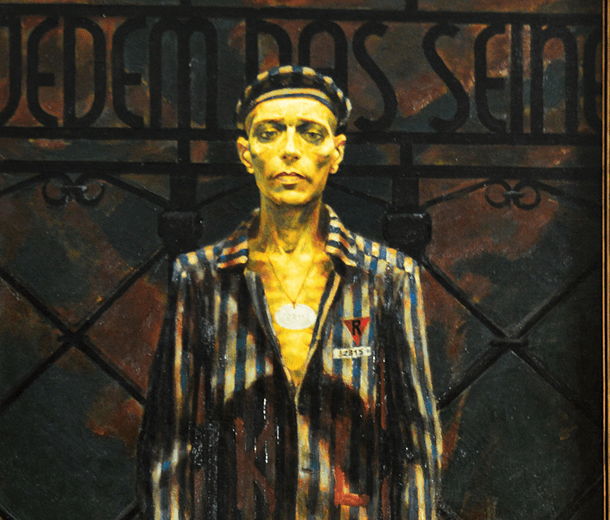
"A concentration camp is an isolated system created for the purpose of mass physical and moral extermination of people. A monstrous system, unparalleled in human existence."
M.A. Savitsky
B. Krepak, "Mikhail Savitsky. Red and Black," Minsk: "Mastatskaya Litaratura," 2014, p. 50.
The end of the war
In early June 1945, M.A. Savitsky was declared fit for military service. He was assigned to the 288th Guards Anti-Aircraft Artillery Regiment of the 6th Guards Mechanized Division, commanded by Hero of the Soviet Union, Major General of Tank Troops Sergei Filippovich Pushkarev. By order of the division's chief of staff, Private M.A. Savitsky was appointed military artist, designing the interiors of officers' houses and soldiers' clubs.
In November 1945, the division was redeployed from the Wiener Neustadt area in Austria to the city of Veszprém in Hungary. In late May and early June 1946, the division was transferred from Hungary to the area of the German city of Bad Freienwalde, northeast of Berlin. In early December 1946, the time came for demobilization.
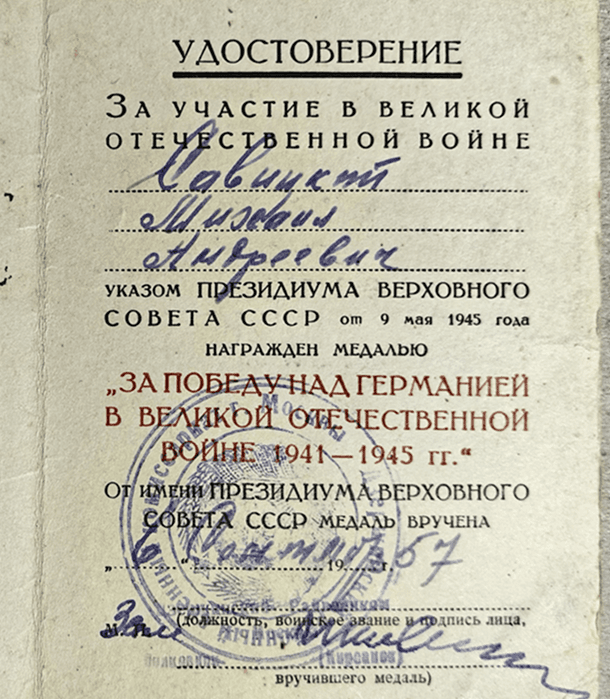
Art school
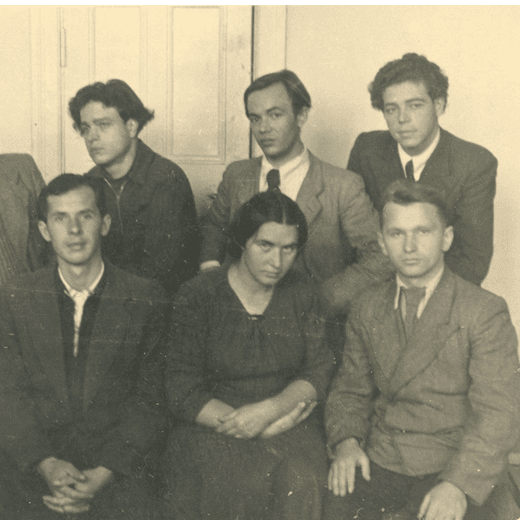
In 1947, M. A. Savitsky enrolled in the Minsk Art School, established in accordance with the decree of the USSR Council of Ministers of July 25, 1947. Savitsky, with his high school diploma, was immediately accepted into the second year of the art and pedagogy department. He took exams only in his specialty: still life painting and composition. Among Savitsky's teachers were L. Leitman, Kh. Livshits, A. Mozolev, A. Shevchenko, I. Akhremchik, V. Sukhoverkhov, and N. Golovchenko. Among classmates: M. Denisova (future wife), M. Chepik, Yu. Puchinsky, V. Mineyko, V. Gromyko, V. Ermoolenko, V. Protasenya, N. Kuychik, I. Basov, V. Versotsky, I. Stolyarov, V. Los, B. Nepomnyashchy, P. Kominich, V. Lednev.
Moscow State Institute named after V. Surikov
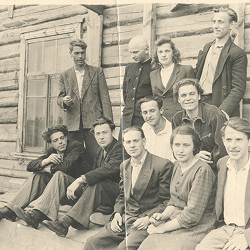
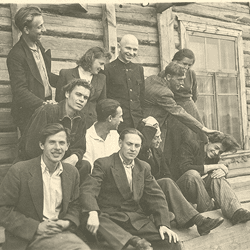
After successfully graduating from the Minsk Art School, M.A. Savitsky, along with his classmates V.A. Gromyko and B.A. Nepomnyashchy, entered the V.I. Surikov Moscow Art Institute. However, only M.A. Savitsky, V.A. Gromyko, and B.A. Nepomnyashchy graduated and returned to Minsk. Initially, M.A. Savitsky's dorm roommates included V.A. Gromyko, T.T. Salakhov, and several others, including a young art school student, A.S. Slepyshev, the future Honored Artist of the RSFSR and Academician of the Russian Academy of Arts.
Among the institute's faculty, M.A. Savitsky developed the most trusting relationship with D.K. Mochalsky.
"Dmitry Mochalsky was a highly respected and, one might say, my only teacher. He treated me especially warmly and often invited me to his place for a snack, or even lunch."
M.A. Savitsky
B. Krepak, "Mikhail Savitsky. Red and Black," Minsk: "Mastatskaya Litaratura," 2014, p. 101.)
With the permission of the institute's rector, F.A. Modorov, M.A. Savitsky spent his summer internship in Belarus with his former classmates from the Minsk Art School—students of the Belarusian Theatre and Art Institute under the direction of V.K. Tsvirko and V.V. Volkov. It was in Belarus, in the village of Kiseli, near Minsk, that M.A. Savitsky made sketches and studies for his future diploma painting, "Song."
Book design
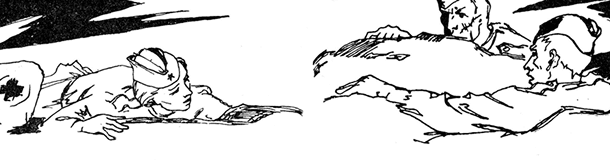
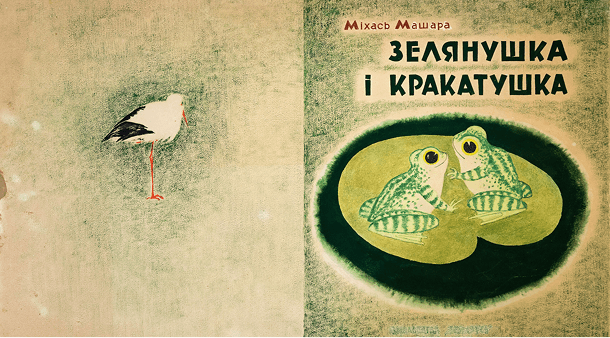
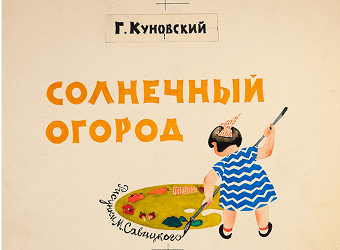
After graduating from the Moscow Art Institute named after V.I. Surikov, M.A. Savitsky returned to his homeland in Belarus and began to live in Minsk with his wife M.Z. Savitskaya (Dzyanisova). At the beginning of his creative path, in parallel with working on paintings, he was engaged in book graphics. He designed children's books by M.A. Mashary, G.M. Kunovsky, made drawings for the magazine "Youth" - illustrations for the stories of V.U. Bykov "The Third Rocket", I.R. Novikov "The Heart Can Do No Other Way", and the novel by I.M. Ptashnikov "Wait in the Distant Gryns".
Main topics
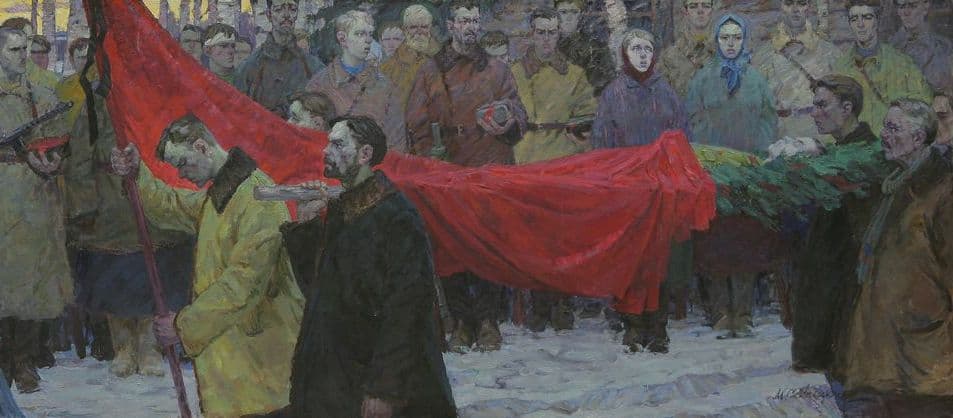
The main themes of M.A. Savitsky's art from the 1960s to the 1980s were: the people's heroism during the Great Patriotic War of 1941–1945, working life, and historical revolutionary themes. One of his first works dedicated to the Great Patriotic War of 1941–1945 was the painting "Honor to Duty," painted in 1958.
Master of the "severe style"
M.A. Savitsky believed that he painted the painting "Partisans" better than his previous works. It was with this painting that the artist declared himself as one of the greatest masters of the "severe style".
In the 1960s and 1970s. "Orsha Partisans" (1966), "The Legend of Mina Shmyrov" (1968), "The Execution" (1968), "Partisans. Blockade" (1966–1967), "Vitebsk Gates" (1967), "The Murder of a Partisan's Family" (1972), "Field" (1974) were painted.
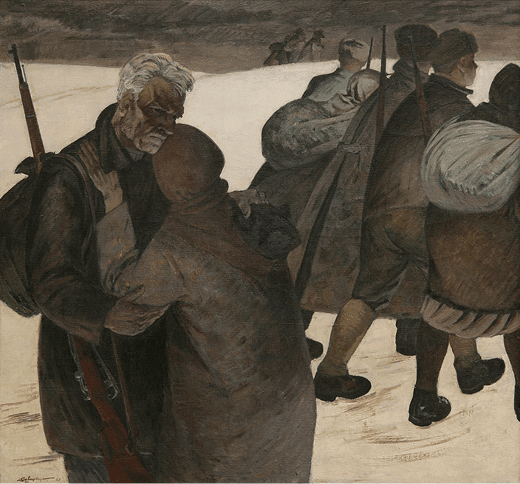
"While working on the painting "Partisans" M.A. Savitsky first revealed himself as an original artist who captivates with the spirituality of images and drama.”
E. Pugacheva “Mikhail Savitsky”, Minsk: “Belarus”, 1982, p. 25.
Two Madonnas
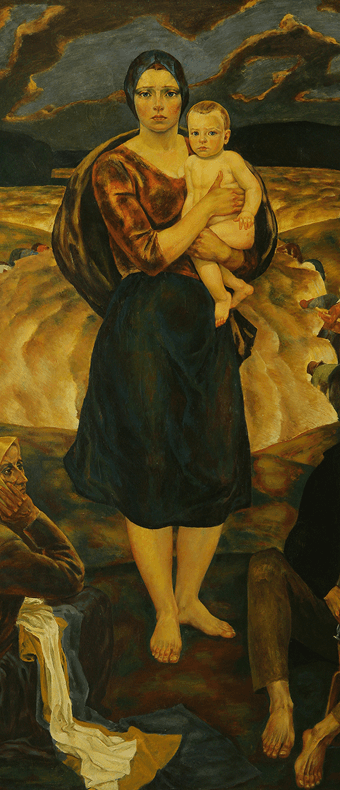
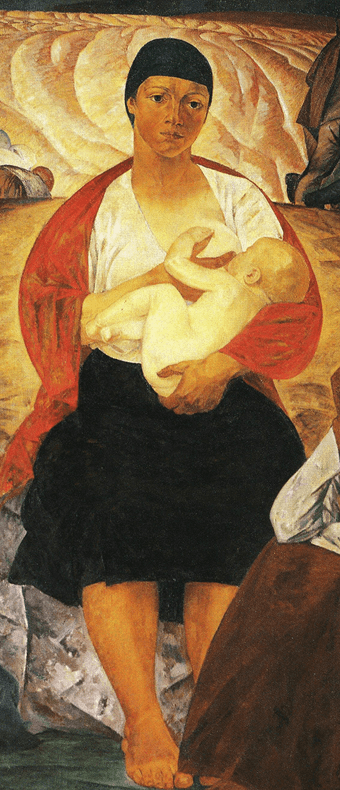
However, the apotheosis of this theme was the image of the republic-partisan in the paintings "Partisan Madonna" (1967) and "Partisan Madonna of Minsk" (1978).
"The two "Madonnas" as it were closed the period of 1960 - 1970s. in Belarusian painting, when the figurative and stylistic features of the modern fine arts of the republic were most actively formed. <…> Thus was formed Mikhail Savitsky - an artist of a philosophical nature, whose purpose is to show in close-up the highest moral and spiritual laws that govern humanity."
E. Pugacheva "Mikhail Savitsky", Minsk: "Belarus", 1982, pp. 27 - 28.
Recognition
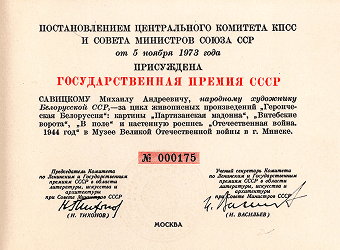
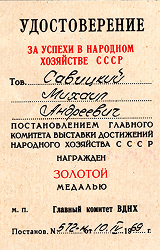
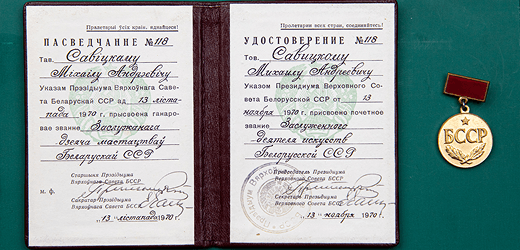
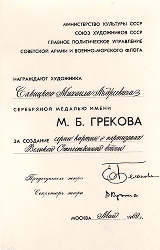
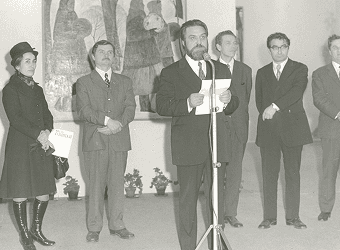
Recognition and fame came to M.A. Savitsky. His painting "Partisans" was awarded a diploma from the Union of Artists of the USSR, "Partisan Madonna" received a silver medal from the USSR Academy of Arts, and "Partisans. Siege" received a gold medal from the Exhibition of Achievements of the National Economy of the USSR. In 1967, M.A. Savitsky was awarded the Order of the Badge of Honor. In 1970, he was awarded the title of Honored Artist of the Republic. At the same time, he received the State Prize of the BSSR for his paintings "Execution," "Bread," and "Workers." In 1972, M.A. Savitsky received the title of People's Artist of Belarus and the Order of the Red Banner of Labor. In 1973, M.A. Savitsky was awarded the USSR State Prize for his series of paintings, "Heroic Belarus." He was also elected a Corresponding Member of the USSR Academy of Arts, a laureate of the International Exhibition of Realistic Painting in Sofia, and later an honorary member of the Union of Artists of the GDR.
Birth of a son
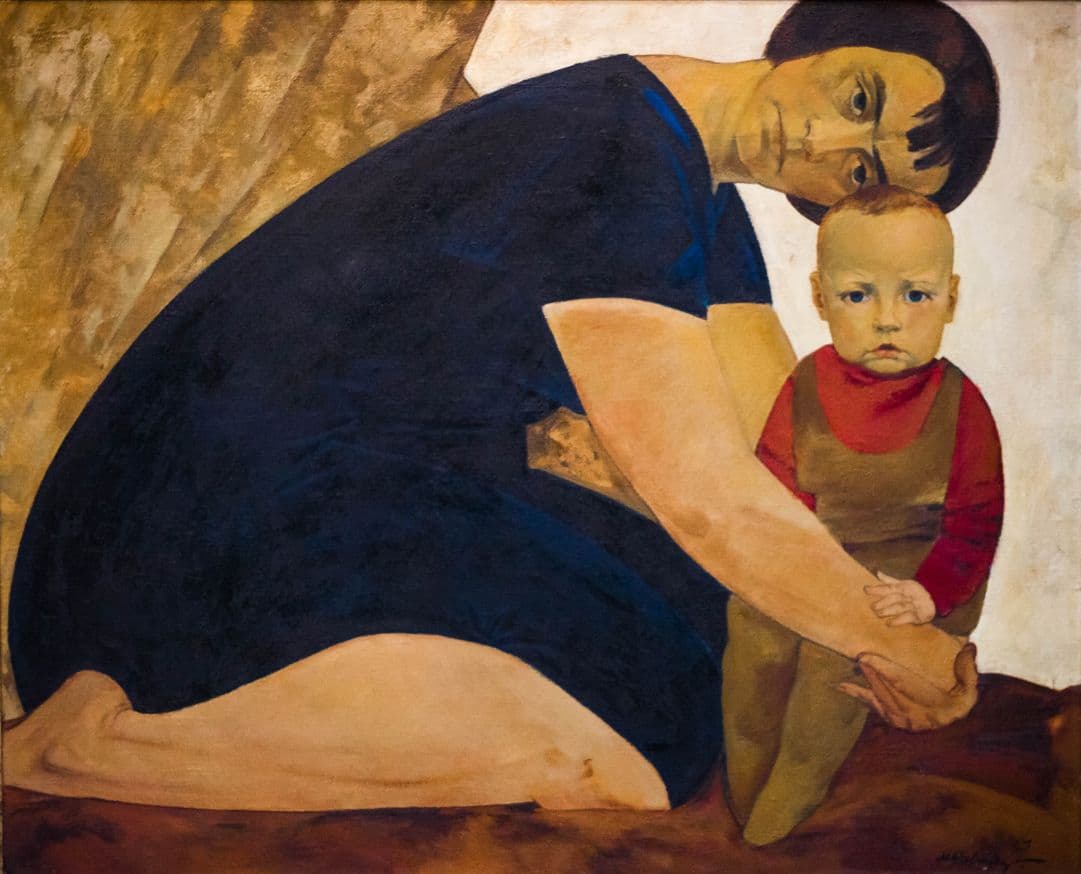
The artist depicted an important and joyful event in his family's life – the birth of a son – in the canvas "Rita and Andrei".
Figures on the heart
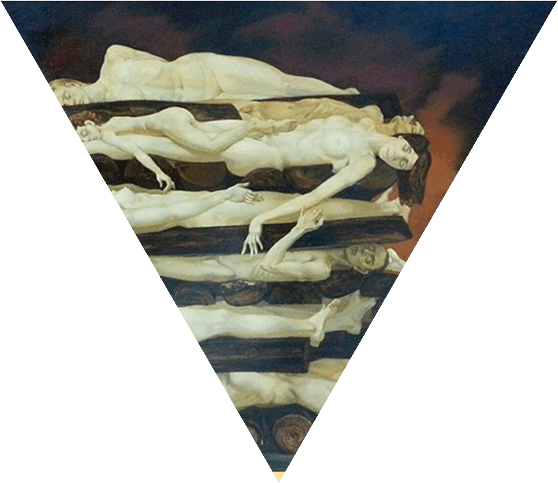
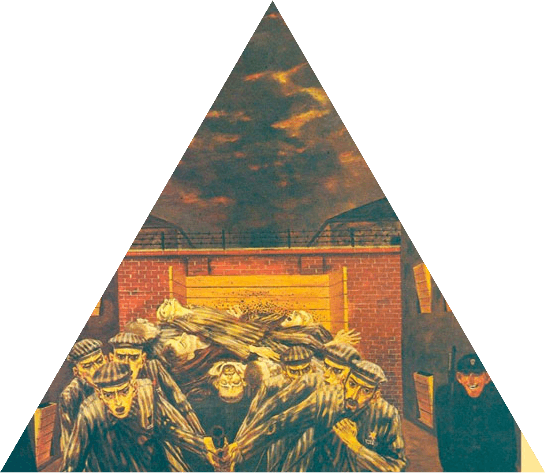
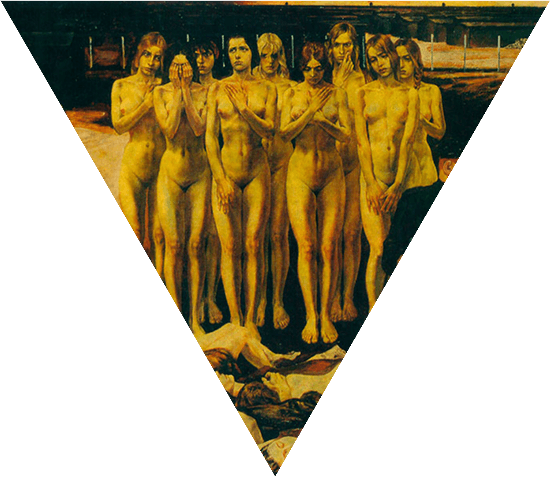
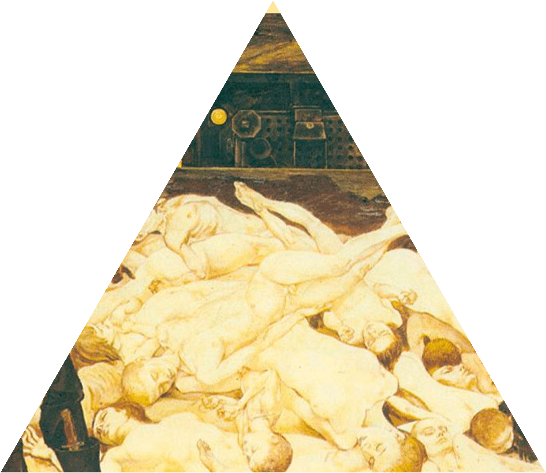
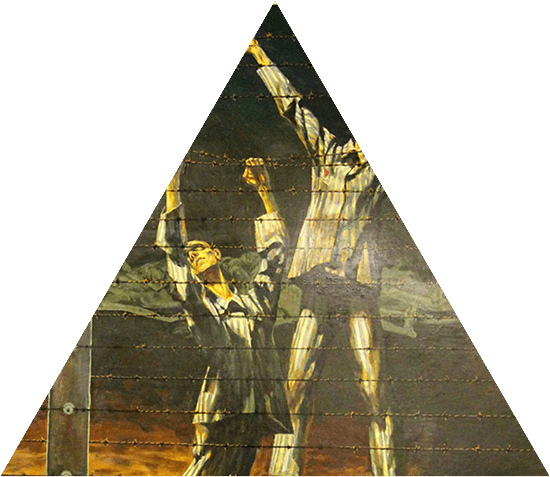
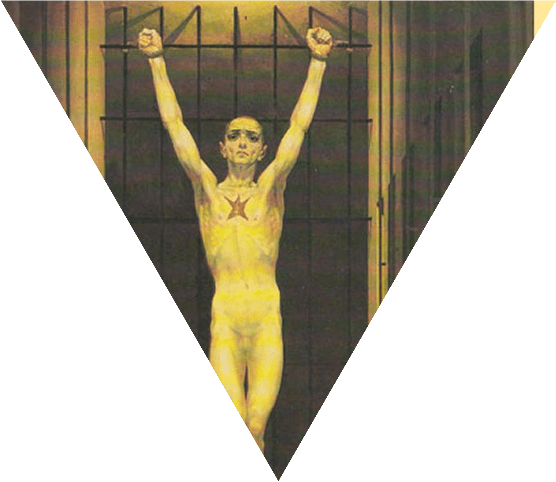
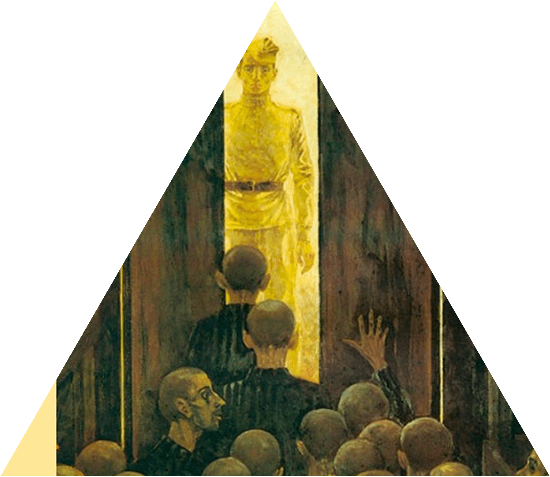
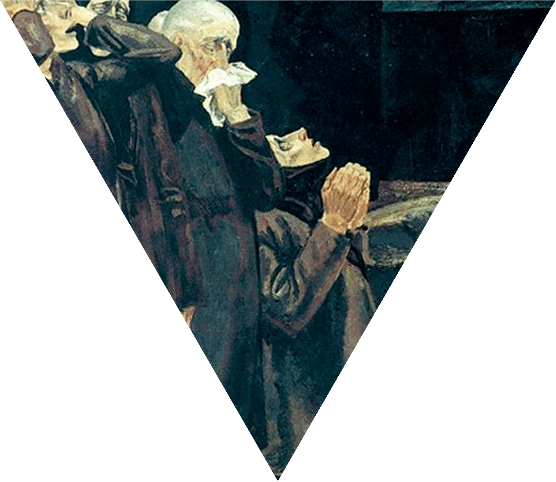
In the 1970s, M.A. Savitsky began one of his major works – the " Figures on the Heart" series. By the end of 1978, he had completed ten paintings, three more in early 1979, and the cycle concluded with three works in 1987. The paintings' subjects expose the crimes of fascism against individuals and humanity.
"I couldn't help but paint this series. Firstly, in memory of the millions who perished in concentration camps. Secondly, to tell young people born after the war that it is unseemly to forget."
M.A. Savitsky
B. Krepak, "Mikhail Savitsky. Red and Black," Minsk: "Mastatskaya Litaratura," 2014, p. 175.
Social activities
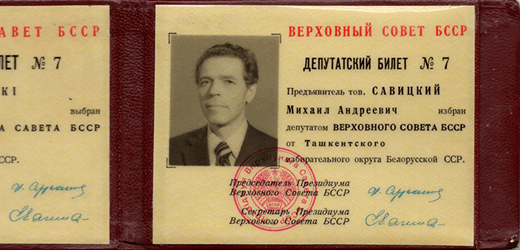
M.A. Savitsky was also active in public life. In 1975, he was elected to the Supreme Soviet of the Byelorussian SSR. Despite his busy government and public life, he continued to work productively and was awarded the title of People's Artist of the USSR in 1978.
Working man
Alongside the military theme, M.A. Savitsky also developed a collection of works about the working man. The earth in his paintings is typically depicted in warm, golden colors. He also depicts his heroes in earthy tones—shades of gold. "Harvest" (1966), "Bread" (1968), "In the Field" (1972), "Grain" (1975), and "Bread of the New Harvest" (1979)—in these works, bread is not seen as a simple food product; it is a symbol of life. For M.A. Savitsky, bread embodies the labor of many generations, the honor and dignity of man.
M.A. Savitsky's deep emotional attachment to ordinary people determined another direction of his creative exploration – the embodiment of the image of the worker. The artist addressed this theme in the paintings "Social Obligation" (1967) and "Workers" (1968).
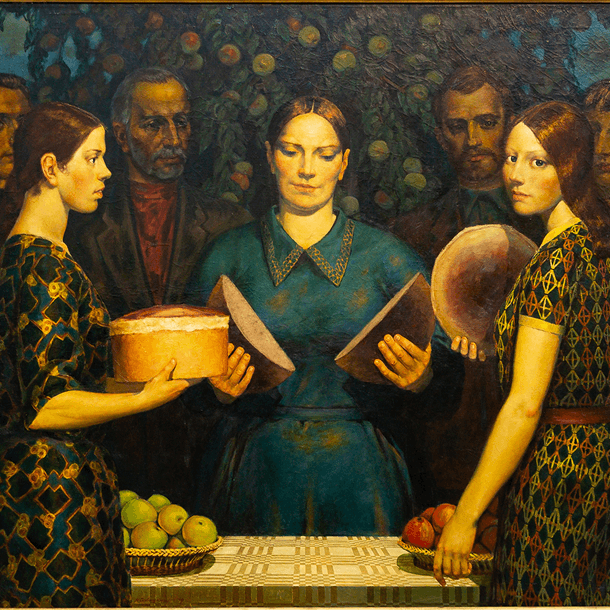
M.A. Savitsky, "New Harvest Bread." Oil on canvas, 1979, 100x120 cm. From the collection of the National Art Museum of the Republic of Belarus.
Lenin's theme
The "Leninist" theme occupied a significant place in M.A. Savitsky's work in the 1970s. His "Leniniana" contains much that is innovative, valuable in terms of figurative, plastic, and compositional qualities: "Unanimity" (1969-1970), "August 30, 1918" (1972), and "The First Decrees" (1977). According to art historian B.A. Krepak, between 1976 and 1977, M.A. Savitsky painted ten portraits of Lenin for the Central Committee of the Communist Party of Belarus, the Council of Ministers, and the Minsk Regional Party Committee.
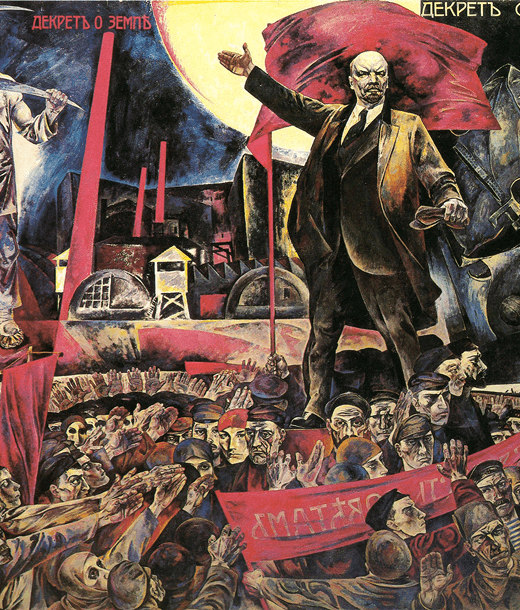
M.A. Savitsky. "Unanimity." Oil on canvas, 1969–1970. 260 x 295 cm. From the collection of the National Art Museum of the Republic of Belarus.
Monumental art
In the 1970s, M.A. Savitsky made history in monumental art, establishing himself as a monumental painter and master of monumental tapestry. In 1972, M.A. Savitsky completed a monumental mural at the Belarusian State Museum of the History of the Great Patriotic War, dedicated to the liberation mission of the Soviet Army.
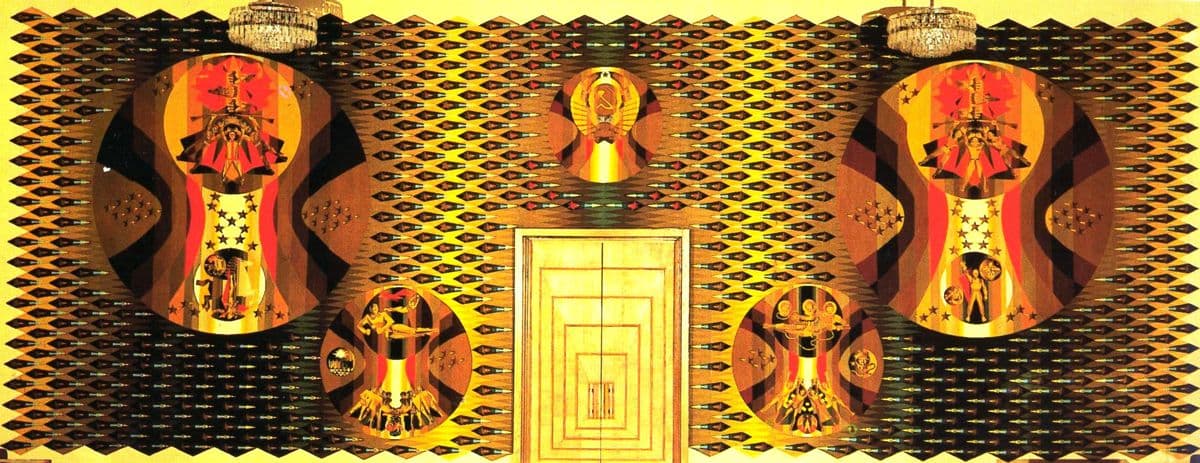
Between 1975 and 1978, M.A. Savitsky and A.M. Kishchenko worked on the tapestries "Leninism" and "USSR. Stages of Victory" for the building of the Central Committee of the Communist Party of Belarus. The works are striking in their monumental grandeur. Each is based on a composition of circles inscribed with symbols of the global events of the era.
Another monumental work, co-authored with A.M. Kishchenko, was the mural "Triumph of Generations" (1973), created for the lobby of the Belarus sanatorium in Miskhor.
"It seems to be going according to plan. I made a color sketch in my head. That's what the architecture required. And it's better this way. It's concrete, clear, the figures are golden, and the blue planet and the light blue beneath the figures below make the work unique. I've re-done all the drawings. I've only started on 20. I spent a long time puttiing and priming. I've only mixed 40 faces into the primer."
From the text of A.M. Kishchenko's letter
Yanka Kupala
M.A. Savitsky perceived the history and identity of Belarus through the poetry of Yanka Kupala. The image of Yanka Kupala first appeared in the artist's paintings in 1972. Then he painted "The Sowers," a portrait of Yanka Kupala and Yakub Kolas. In 1976, he painted "Vilnius Meetings" for the Yanka Kupala State Literary Museum. By 1980, a series of eleven paintings based on Yanka Kupala's works had been created for the interior of the poet's museum in Minsk.
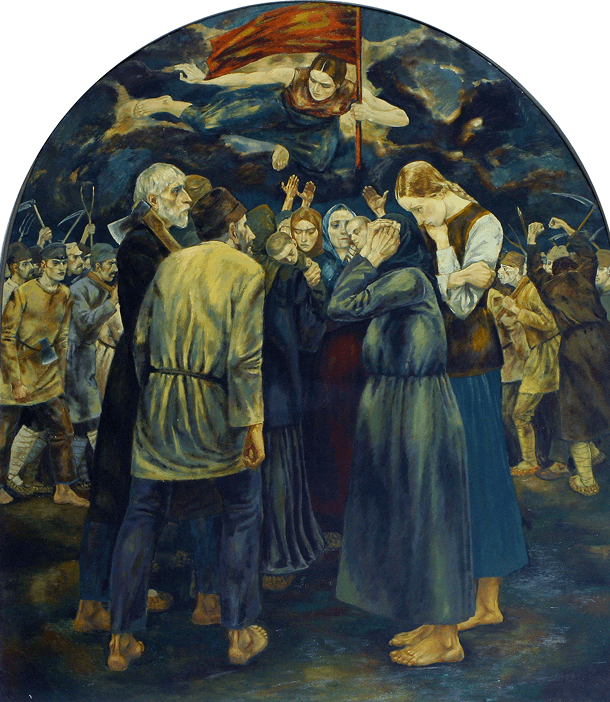
M.A. Savitsky "Belarusians". Oil on canvas, 1979. From the collection of the Yanka Kupala State Literary Museum.
Black Tale
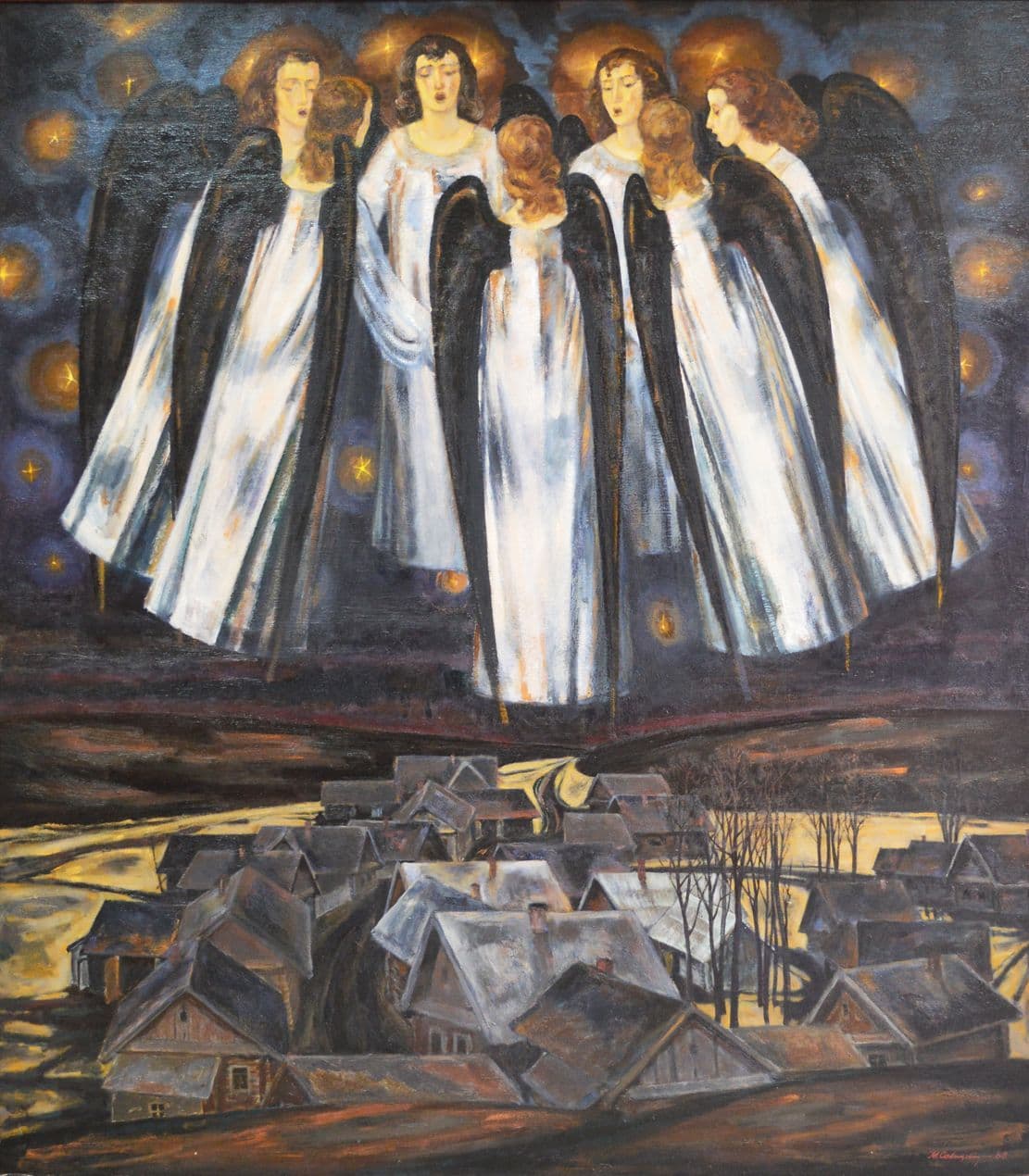
In 1986, M.A. Savitsky began creating the "Black Tale" cycle, dedicated to the largest man-made disaster of the 20th century – the Chernobyl nuclear power plant accident. M.A. Savitsky is a pioneer of this theme in art. In his search for a creative method, the artist settled on "stories" from the real lives of Chernobyl victims, imbuing most of his compositions with profound symbolic and allegorical meaning.
"I learned about the explosion at the Chernobyl nuclear power plant from a television report while I was vacationing at my dacha in Zhdanovichi. I saw how heroically people were bustling about. <…> Chernobyl is an apocalypse, not just a major accident. <…> In short, literally a few days after the disaster, in early May 1986, I took up my brushes. To do this, again, as in the case of “Numbers on the Heart,” I needed to find some new figurative and plastic forms, different from those found previously…”
M.A. Savitsky
B. Krepak “Mikhail Savitsky. Red and Black”, Minsk: “Mastatskaya Litaratura”, 2014, p. 193.
Biblical theme
In the 1990s and 2000s, Christianity became a central theme in M.A. Savitsky's work. He created a number of works based on biblical themes, including the "Beatitudes" cycle.
"The Bible is a brilliant condensation of human life experience, the quintessence of human destinies. Reading it, I thought: how resonant are biblical principles for our time!"
M.A. Savitsky
B. Krepak, "Mikhail Savitsky. Red and Black," Minsk: "Mastatskaya Litaratura," 2014, p. 199.
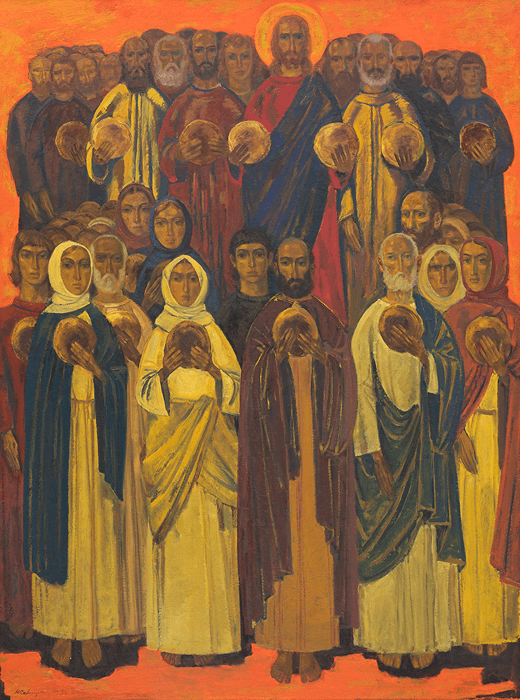
M.A. Savitsky, "The Miracle of the Bread." Oil on canvas, 1994, 200x150 cm. From the collection of the Minsk History Museum.
Passing on experience
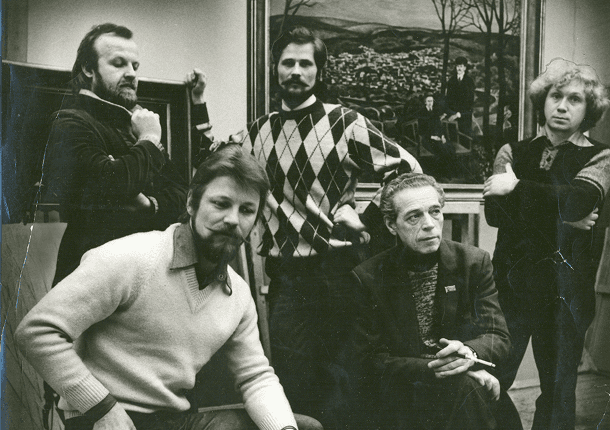
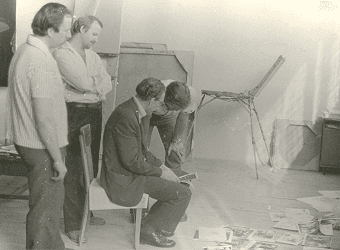
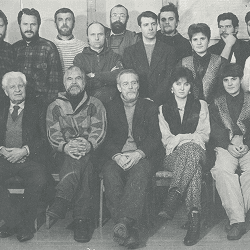
In 1981, on the initiative of M.A. Savitsky, the state cultural institution "Creative Academic Workshops of Painting, Graphics, and Sculpture" was established as painting workshops of the USSR Academy of Arts. They were subsequently expanded to include a sculpture workshop, headed by People's Artist of the USSR Z.I. Azgur (1981), and a graphics workshop, headed by People's Artist of Belarus G.G. Poplavsky (1987). From their founding until 2010, M.A. Savitsky served as the permanent director of the workshops.
The creative academic workshops provided postgraduate education for young artists—painters, graphic artists, and sculptors. During their existence, the workshops advanced their professional development, helping over one hundred Belarusian artists improve their skills. Promising young artists were admitted after graduating from a higher art institution, based on a decision by the Art Council and a competitive process. The three-year creative process was conducted under the supervision and constant consultation of workshop directors.
Artists who graduated from the Creative Academic Workshops have received wide recognition from the Belarusian public and abroad. They work as leading teachers at the Belarusian Academy of Arts and art schools across the country.
Recognition in Belarus
M.A. Savitsky's achievements were highly regarded in the 1990s and 2000s. For example, in 1997, the artist was awarded the Order of Francysk Skaryna No. 1. In 1998, he was awarded the State Prize of the Republic of Belarus, and in 2000, the title of Laureate of the International St. Andrew the First-Called Prize in the "For Faith and Loyalty!" nomination. In 2001, M.A. Savitsky was made an honorary citizen of Minsk. In 2006, he was awarded the title Hero of Belarus.
On November 8, 2010, M.A. Savitsky died. He is buried at the Vostochnoye Cemetery in Minsk.
On June 28, 2012, a memorial plaque (sculptor: V.P. Zankovich) was unveiled at 17 Belomorskaya Street, where the artist lived.
On September 8, 2012, the Mikhail Savitsky Art Gallery opened in Minsk with the participation of President of the Republic of Belarus A.G. Lukashenko.
By decision of the Minsk City Council of Deputies of December 24, 2020, No. 259, a street named after People's Artist of the USSR and Hero of Belarus Mikhail Savitsky (Mikhail Savitsky Street) was established on the territory of the Minsk World MK.
In November 2023, Secondary School No. 147 in Minsk was named after Hero of Belarus M.A. Savitsky.